
 Save
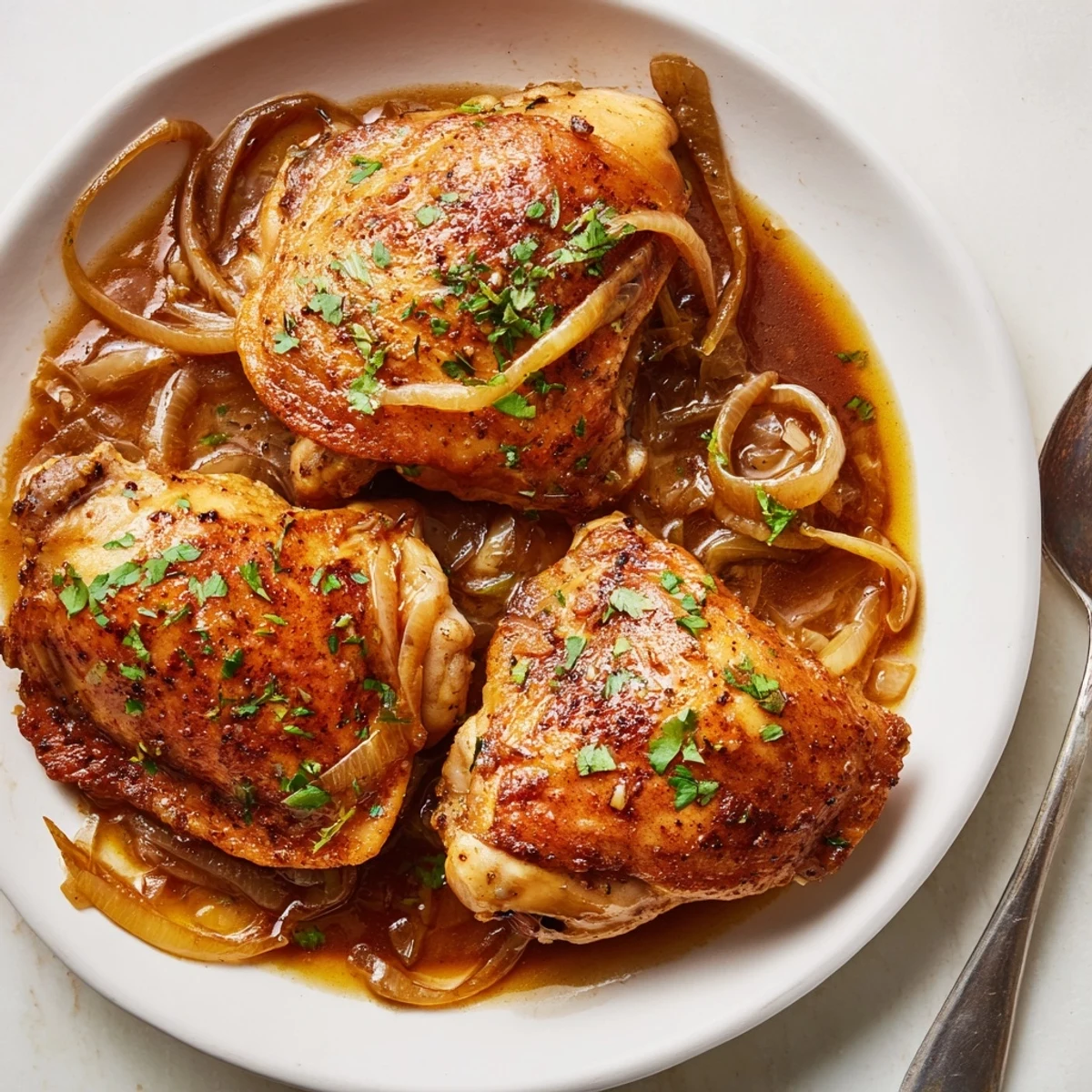
Save Start by patting bone-in, skin-on chicken thighs dry and seasoning with salt, pepper, smoked paprika and thyme. Sear skin-side down in olive oil and butter until deeply browned, then remove. Sauté thinly sliced onions and garlic, sprinkle in flour, and whisk in chicken broth to create a glossy, onion-rich gravy. Return the thighs, spoon gravy over them, cover and simmer 25–30 minutes until tender. Finish with chopped parsley and serve over mashed potatoes, rice, or buttered noodles; swap gluten-free flour if needed.
The first time the scent of caramelizing onions and paprika drifted through my kitchen, I almost forgot I was cooking—I just stood there, eyes shut, letting it all soak in. Smothered chicken thighs aren't flashy, but they're reliably soothing, turning ordinary weeknights into something a bit cozier. There's something gratifying about watching gravy bubble up, promising warmth and comfort with every spoonful. This is the kind of recipe that quietly wins people over, one forkful at a time.
One rainy Thursday, I made this for a friend who’d just moved into her first apartment—her eyes widened as the gravy simmered, and we both realized this dish is really about making gloomy days brighter. Laughing at how many onions we teared up over and sneaking spoonfuls of sauce, that kitchen was instantly warmer, both literally and in spirit.
Ingredients
- Bone-in, skin-on chicken thighs: The bones keep the chicken juicy and the crispy skin is unbeatable—pat them extra dry before seasoning to help them brown perfectly.
- Yellow onions: Go for big, firm onions; the slow sauté brings out their sweetness and makes the gravy deeply aromatic.
- Garlic: Mince it fine so the flavor melts right into the sauce—don’t rush this, it’s worth every second.
- Chicken broth: Use a good quality low-sodium broth; if homemade is an option, it elevates the whole dish.
- All-purpose flour (or gluten-free flour): Just enough to thicken up the gravy; whisk it in slowly to avoid any pesky lumps.
- Olive oil: Helps the chicken skin get that gorgeous golden color—don’t skimp on it.
- Unsalted butter: Helps add depth and a rich finish to the onion base—add a pat right when the onions start to soften for the best effect.
- Smoked paprika: It sneaks subtle smokiness into every bite; regular paprika works, but smoked really stands out here.
- Dried thyme: A little earthy lift—rub it between your fingers before adding to wake up the oils.
- Salt and black pepper: Tastes vary, so start light and adjust as the gravy simmers; taste as you go.
- Fresh parsley (optional): A sprinkle at the end wakes up the plate—if you have it, don’t skip it.
Instructions
- Prep and Season:
- Pat each chicken thigh completely dry, then scatter salt, pepper, smoked paprika, and thyme all over—rubbing it in with your hands gets the most flavor.
- Sear the Chicken:
- Get your skillet hot, add the olive oil and butter, and listen for that lively sizzle as the chicken hits the pan; let the skin crisp undisturbed, about six minutes a side.
- Soften the Onions:
- Toss the sliced onions into the same pan—watch them caramelize and catch all the flavor left behind; it’s okay if the edges brown a bit.
- Add Garlic and Flour:
- Once the onions are soft and shimmering, stir in the garlic, let it bloom for a minute, then sprinkle over the flour and stir constantly for two minutes to lose any rawness.
- Make the Gravy:
- Slowly pour in chicken broth, whisking as you go—pause to scrape up every browned bit stuck to the pan, letting it all mingle.
- Simmer the Chicken:
- Nestle the thighs back in, skin-side up, and spoon gravy over each one; lower the heat, cover and let them simmer gently for half an hour, until juices run clear and the gravy’s lush.
- Final Touches:
- Uncover, have a taste—adjust salt or pepper if you need; to serve, ladle onions and sauce over chicken, garnish with chopped parsley if you’re feeling fancy.
 Save
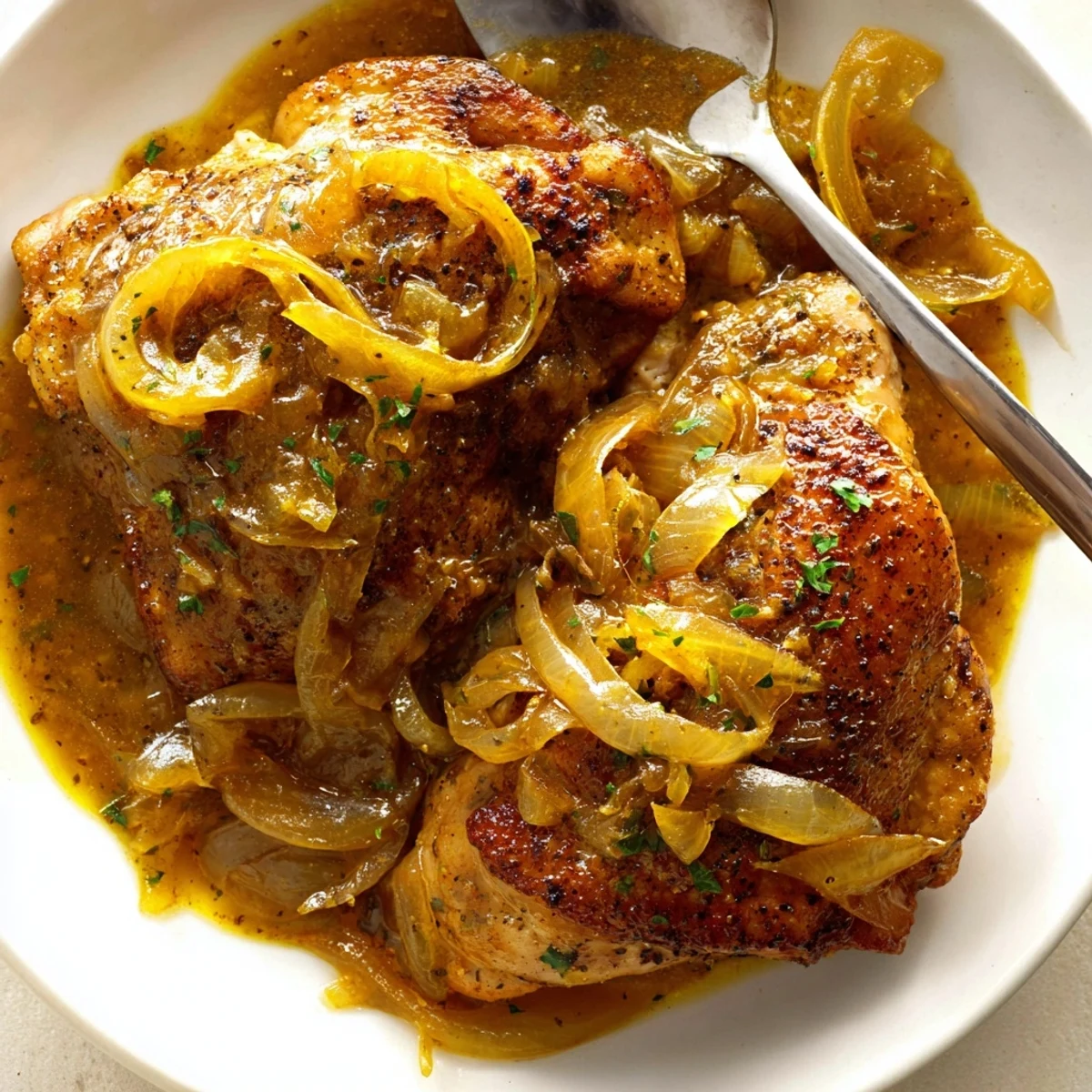
Save I’ll never forget the quiet joy on my grandmother’s face as she mopped up her plate with bread, declaring she hadn’t tasted gravy like that since her childhood—sometimes, a humble meal pulls people closer around the table without a word.
Choosing Your Pan Matters
I’ve found a wide, heavy pan like a Dutch oven works wonders, keeping the sauce evenly heated and leaving plenty of space for each chicken thigh to sear instead of steam.
Perfecting That Gravy
If you notice the gravy thickening up too much as it simmers, just add a splash more broth; tasting as you go is key for reaching that ideal balance of savory and silky.
Serving Suggestions To Try
I love spooning this over fluffy mashed potatoes, but a bed of steamed rice or crunchy roasted veggies makes it equally irresistible.
- Keep extra gravy on the side for anyone who wants more (there are always a few).
- A squeeze of lemon at the table adds brightness if you like a tangy finish.
- Leftovers reheat beautifully with just a splash of stock to loosen the sauce.
 Save
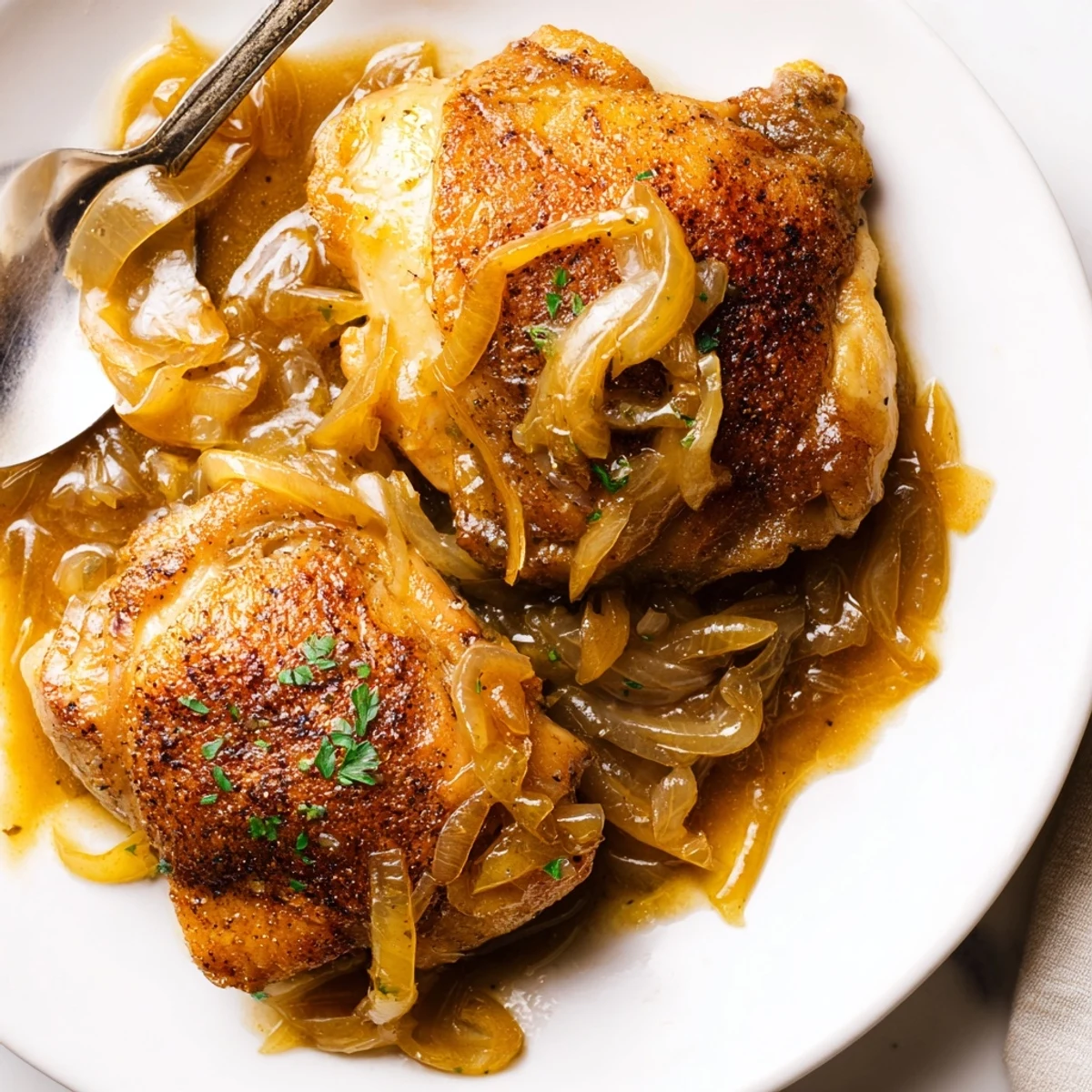
Save May this smothered chicken bring warmth and plenty of laughter to your own table. It’s the kind of comfort food that always feels like home, no matter where you serve it.
Recipe FAQs
- → How do I keep the chicken skin crisp before simmering?
-
Pat the skin very dry and sear skin-side down without moving until deeply browned; this renders fat and sets a crisp surface before the thighs finish in the gravy.
- → How can I thicken the gravy without lumps?
-
Cook the flour briefly with the onions to remove raw taste, then whisk in the broth gradually over medium heat until the mixture is smooth and reaches the desired thickness.
- → What's a good gluten-free substitution for the flour?
-
Use a 1:1 gluten-free flour blend or a light dusting of cornstarch mixed with cold broth before adding; both yield a glossy, thickened gravy.
- → Can I add wine for extra depth?
-
Yes—deglaze the pan with a splash of dry white wine after searing and before the broth; simmer briefly to cook off alcohol and concentrate flavor.
- → What vegetables or sides pair well with the dish?
-
Classic pairings include creamy mashed potatoes, buttered noodles or rice. Stirring in mushrooms or bell peppers with the onions adds body and color.
- → How should leftovers be stored and reheated?
-
Refrigerate in an airtight container up to 3 days. Gently reheat in a covered skillet over low heat, adding a splash of broth if the gravy has thickened too much.